Harvesting Rainwater: A Beginner's Guide to This Sustainable Water Source

As water flows off your roof during the next rainstorm, it's not just disappearing down the downspout, it's potential money and opportunity washing away. For homeowners facing rising water bills and growing environmental concerns, rainwater harvesting offers a smart solution that can capture this gift right from your rooftop.
Water scarcity affects communities across the globe, and residential landscape irrigation accounts for nearly 9 billion gallons daily in the United States alone. When an average American family uses over 300 gallons of water each day—with 30% dedicated to outdoor activities—capturing free rainwater could be a money-saving strategy as well as an environmental benefit.
Is it Legal to Collect Rainwater?
The good news is that rainwater harvesting is legal in most of the United States. The federal government doesn't regulate rainwater collection, leaving individual states to determine their own laws. This means 46 out of the lower 48 states either don't regulate rainwater harvesting at all or actively encourage it as a water conservation method.
However, two states maintain restrictions that are worth noting. Colorado has the most restrictive laws, allowing residents to collect only two rain barrels with a maximum capacity of 110 gallons total. This water can only be used for outdoor purposes like car washing and lawn watering. These restrictions stem from a 120-year-old law based on the idea that collected rainwater might otherwise flow downstream to someone else's water supply.
Utah allows collection of up to 2,500 gallons but requires a permit for any rainwater harvesting system.
On the progressive side, states like Texas, California, and North Carolina actively encourage rainwater harvesting. Texas offers tax incentives and sales tax exemptions for rainwater harvesting systems, while California generally has no regulations preventing water collection except for large-scale projects like swimming pools.
Many areas have specific requirements for container types, filtration systems, or permits that you'll need to follow. Before starting your rainwater harvesting project, check your local ordinances to ensure your system complies.
Pros and Cons of Harvesting Rainwater
Benefits
Rainwater harvesting offers several advantages that make it an attractive option for environmentally conscious homeowners:
- Reduces water bills by providing free water for irrigation and outdoor cleaning
- Promotes water conservation by reducing demand on municipal water supplies
- Improves plant health since rainwater is naturally soft and free from chemicals like chlorine
- Decreases stormwater runoff which helps prevent flooding and reduces pollution in local waterways
- Provides energy savings because less energy is needed to treat and transport municipal water
- Offers emergency water supply during droughts or water restrictions
- Requires minimal maintenance once properly installed
- Reduces soil erosion by managing water flow around your property
Potential Drawbacks
Like any home improvement project, rainwater harvesting comes with some challenges to consider:
- Depends on unpredictable rainfall which can limit water availability during dry spells
- Requires upfront investment for tanks, gutters, and filtration systems
- Needs regular maintenance to prevent clogs and ensure water quality
- Limited storage capacity means you can't collect unlimited amounts of water
- Potential for mosquito breeding if systems aren't properly sealed and maintained
- May attract wildlife if storage tanks aren't properly secured
- Installation requires some technical skills though many systems are DIY-friendly
Consider your local rainfall patterns, water costs, and environmental priorities to decide if a rainwater harvesting system is right for you. If you live in an area with regular rainfall and high water bills, rainwater harvesting could pay for itself within a few years while providing ongoing environmental benefits.
Building Your First Rainwater Collection System
Creating a rainwater harvesting system is more straightforward than you might think. With the right materials and a systematic approach, you can have your system collecting water in a weekend. While this isn't a detailed construction guide, here are the basic steps to setting up a rainwater collection system:
Materials and Tools Needed
- For a basic rainwater collection system, you'll need
- Rain barrel or storage tank (50-1,000+ gallon capacity)
- Gutters and downspouts properly sized for your roof area
- Leaf screens or guards to filter debris from gutters
- First flush diverter to redirect initial dirty water
- PVC pipe and fittings for water conveyance
- Spigot or valve for water access
- Overflow fitting to handle excess water
- Screen mesh to cover all openings
- Level for proper tank placement
- Basic plumbing tools including pipe cutter and wrench set
- Irrigation components to water your lawn or garden with your collected rainwater
Step-by-Step Installation
Step 1: Choose Your Location
Select a level area near your downspout where your storage tank will sit. The ground should be stable and able to support the weight of a full tank—remember that water weighs about 8 pounds per gallon.
Step 2: Install Gutter Guards
Add leaf screens to your gutters to prevent large debris from entering your collection system.
Step 3: Set Up the First Flush Diverter
Install a first flush diverter to redirect the first portion of rainfall, which contains dust, pollen, and other contaminants from your roof, before clean water enters your storage tank.
Step 4: Connect the Conveyance System
Run PVC pipe from your downspout to your tank, maintaining a continuous downward slope so gravity assists water flow.
Step 5: Install Overflow and Access Points
Add an overflow fitting that's the same size or larger than your inflow to prevent water from backing up. Install a spigot or valve at the appropriate height for easy water access.
TIP: Keep your storage tank covered and screened to prevent mosquito breeding and contamination. Regular maintenance includes cleaning gutters, checking for clogs in your first flush diverter, and inspecting tank screens.
Integrating Irrigation Components
Rain Bird's commitment to the The Intelligent Use of Water™ makes our products the ideal partners for your rainwater harvesting system. Rain Bird components are designed to maximize efficiency and help you get the most from every gallon you collect.
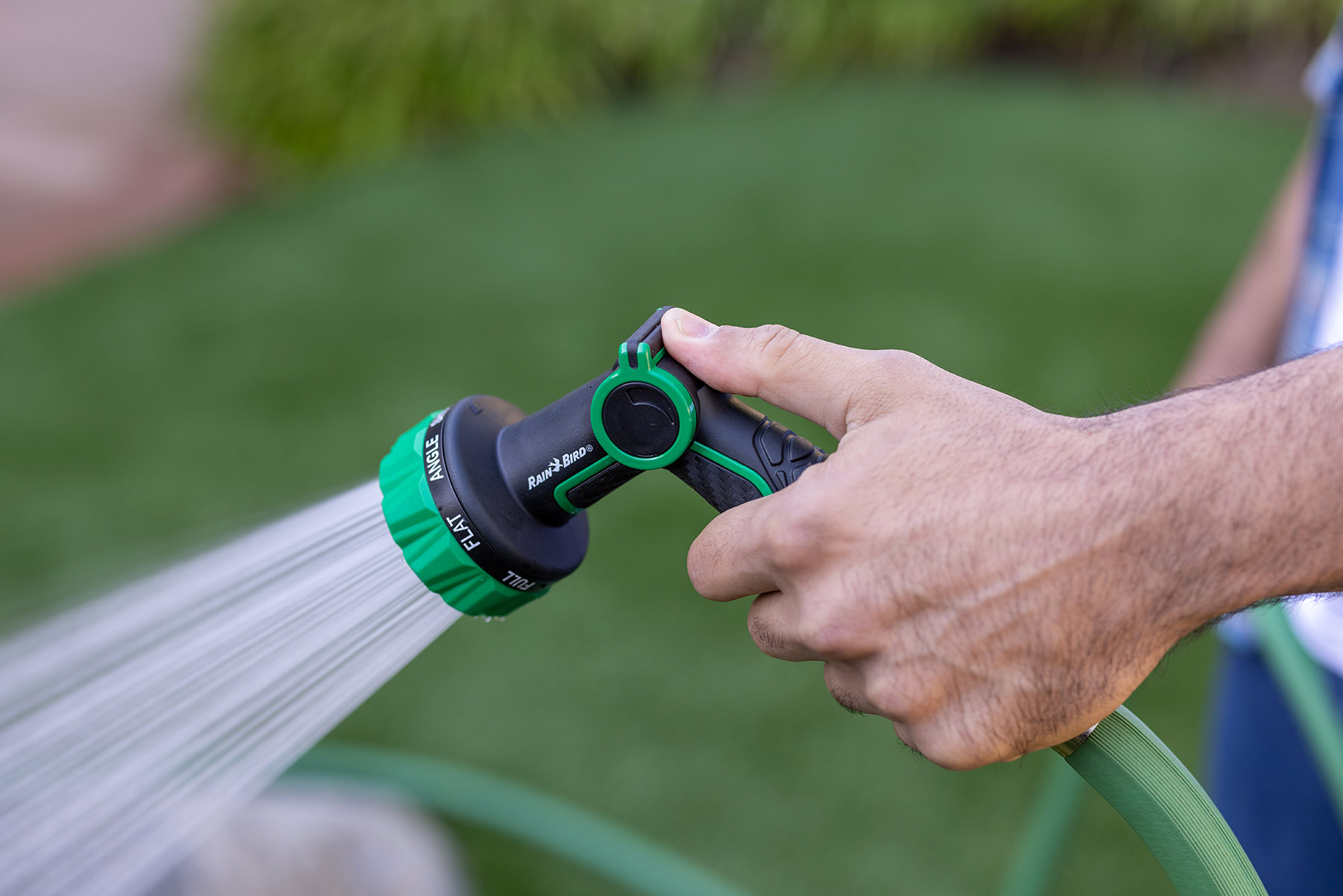
Hand Sprayers: Hand watering offers a simple approach to irrigating with recaptured water. Spray nozzles and wands, like Rain Bird's 8-Pattern Front Trigger Carbon Fiber Pattern Hose or Classic Rear Trigger Metal Hose End Nozzle, allow you to water precisely where and when you need to. Or attach a watering wand to your garden hose, like Rain Bird's 16" or 36" Watering Wand, to extend your reach to extend your reach and bring water to the places that need it most.
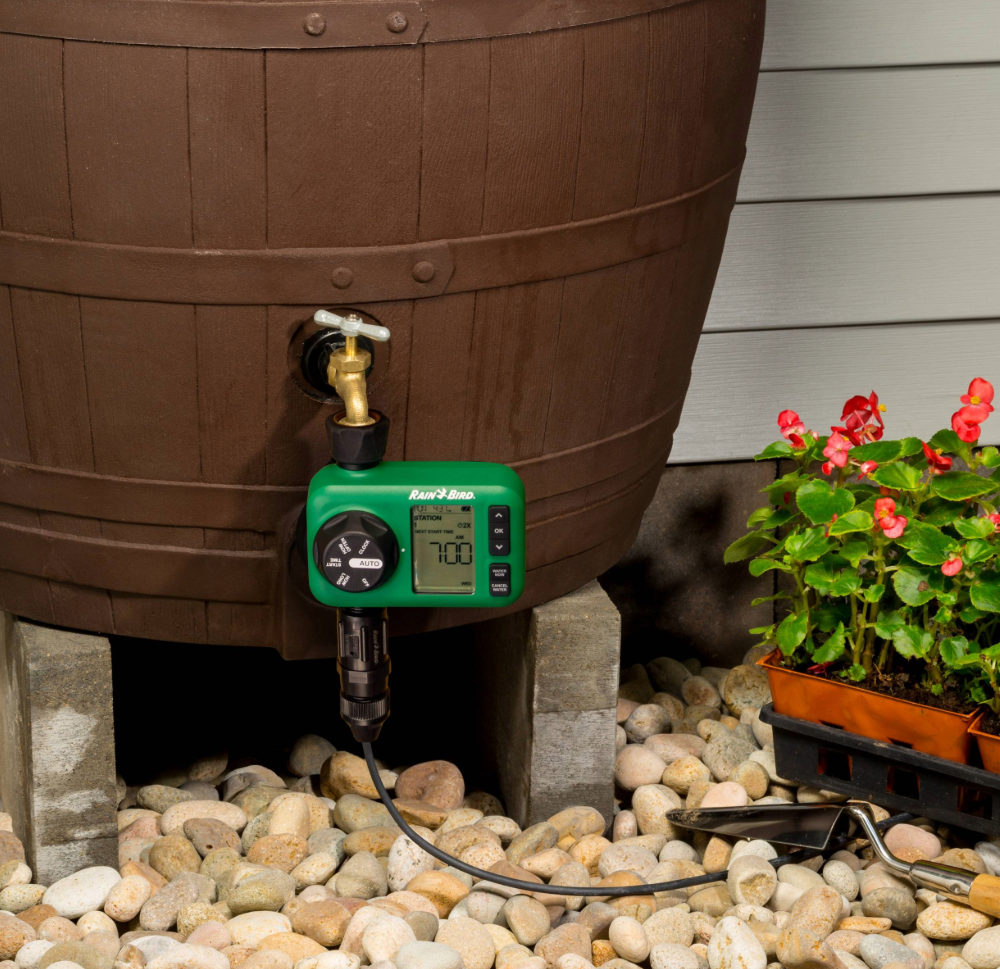
Hose End Timers: A hose-end timer such as Rain Bird's Easy to Program Hose End Timer, Electronic Hose End Timer, or Premium Hose End Timer, adds convenience to your rainwater harvesting system. Programmable watering schedules automate your irrigation times for a hands-off approach.
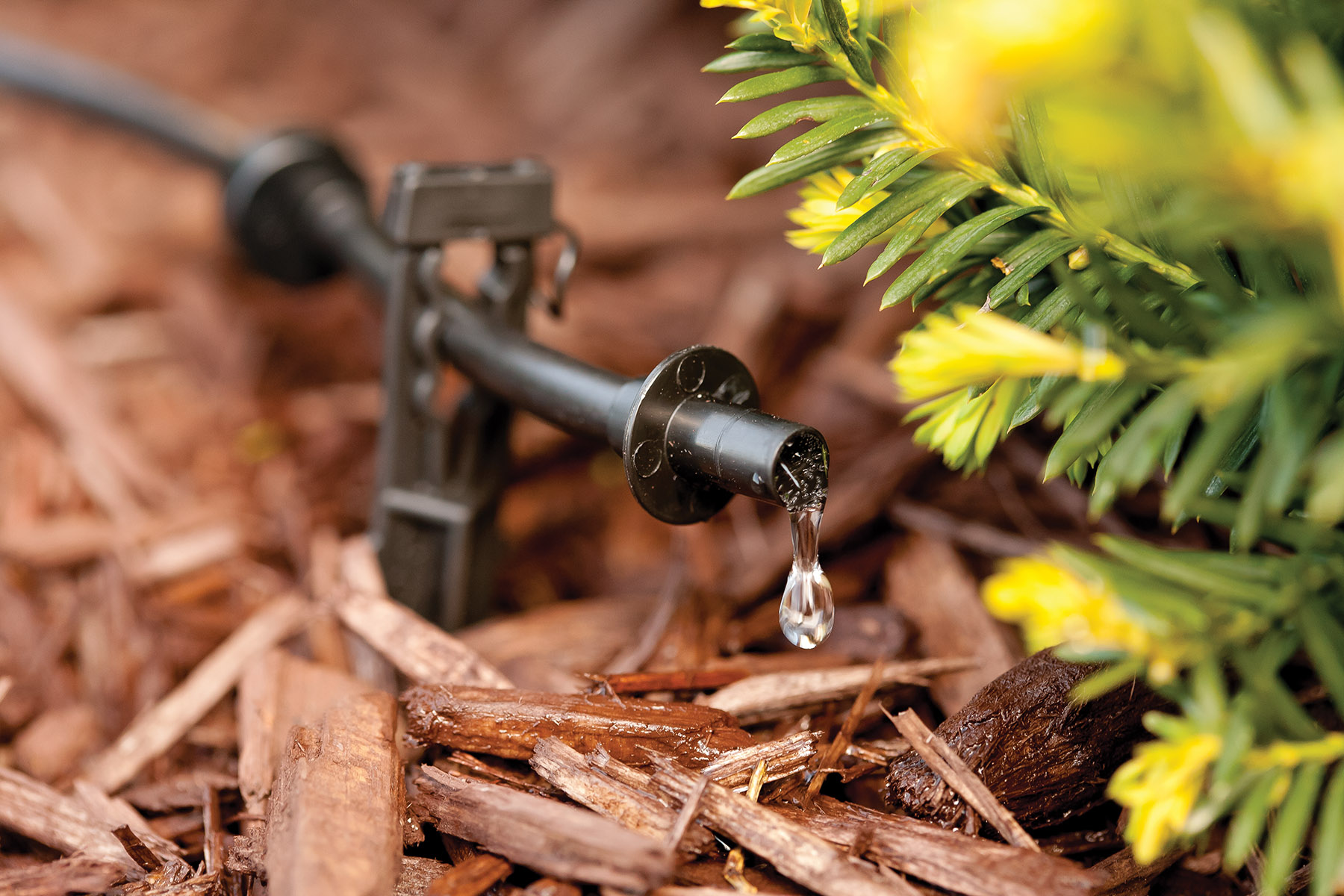
Drip Irrigation Systems: Our drip irrigation products work perfectly with collected rainwater, delivering water directly to plant roots with minimal waste. Drip systems can save up to 30% more water compared to traditional systems, making your collected rainwater go further.
Connecting your rainwater system to Rain Bird irrigation components is straightforward. Rain Bird's wide variety of flexible tubing and fittings make it easy to create custom irrigation layouts that work with your collected water supply. You can rely on gravity to feed your irrigation or install a pump to increase water pressure.
Growing Toward a Sustainable Future
Harvesting rainwater can help lower your water bill while promoting environmental stewardship. Every gallon you collect is a gallon that doesn't strain municipal water supplies or contribute to stormwater runoff. Your rainwater harvesting system can start with a simple rain barrel and expand as you gain experience and see the benefits.
Ready to start harvesting rainwater for your garden? Visit the Rain Bird Store to find irrigation components that will help you make the most of the rainwater you collect. With your rainwater collection system in place, you'll never look at rainfall the same way again.

 Your Privacy Choices